




Why Hunters Use Thermal Imaging for Hog Hunting
Wild hogs can be difficult to locate because they often move through fields, wooded areas, tall grass, and thick brush. Many become active after sunset, when visibility is low. Even in familiar hunting grounds, it can be difficult to distinguish an animal from shadows, vegetation, or other objects.
When hunting wild hogs at night, hunters must remain constantly aware of their surroundings. An animal might be standing still, crossing an open area, or disappearing behind cover in the blink of an eye. Poor visibility makes it challenging to detect movement or assess the surrounding terrain.
This is one reason why hunters use thermal imaging equipment for wild hog hunting. Thermal devices detect infrared radiation emitted by objects and display temperature differences. Unlike conventional night vision, thermal imaging does not depend on visible light reflected from the target. This makes it useful for scanning dark outdoor environments where ordinary observation is difficult.
Locate Hogs Without Relying on Visible Light
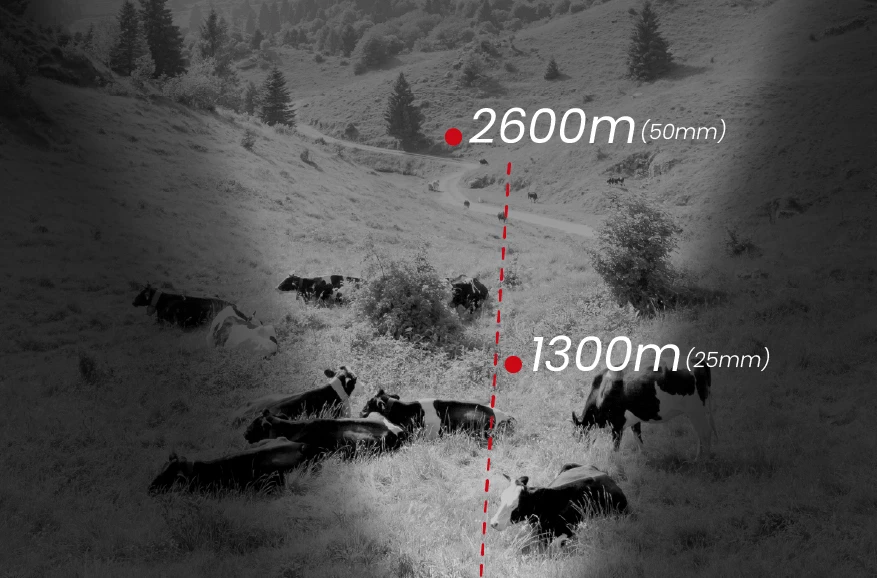
One of the main advantages of thermal imaging technology is its ability to detect heat signatures in dark environments. Hunters can scan open terrain, the edges of fields, and other suitable observation areas without illuminating the entire landscape.
This capability is particularly useful when hogs enter agricultural areas at night. Compared to the cooler ground or surrounding vegetation, the bodies of the wild boar appear as distinct thermal silhouettes, helping hunters pinpoint areas that warrant closer observation.
Furthermore, thermal imaging reduces the need to rely entirely on sound. While the rustling of vegetation or other noises may indicate the presence of an animal nearby, sound alone is often insufficient to determine its exact location.
However, thermal equipment cannot guarantee detection in every situation. Factors such as ambient temperature, vegetation cover, distance, and the specific positioning of the animals can all affect detection performance. Hunters should use thermal imaging as an observation aid rather than assume it will reveal every animal in an area.
Master Field Edges and Feeding Areas
Wild hogs frequently forage in agricultural fields, grasslands, and areas with natural food sources. They may also move between feeding areas and nearby cover.
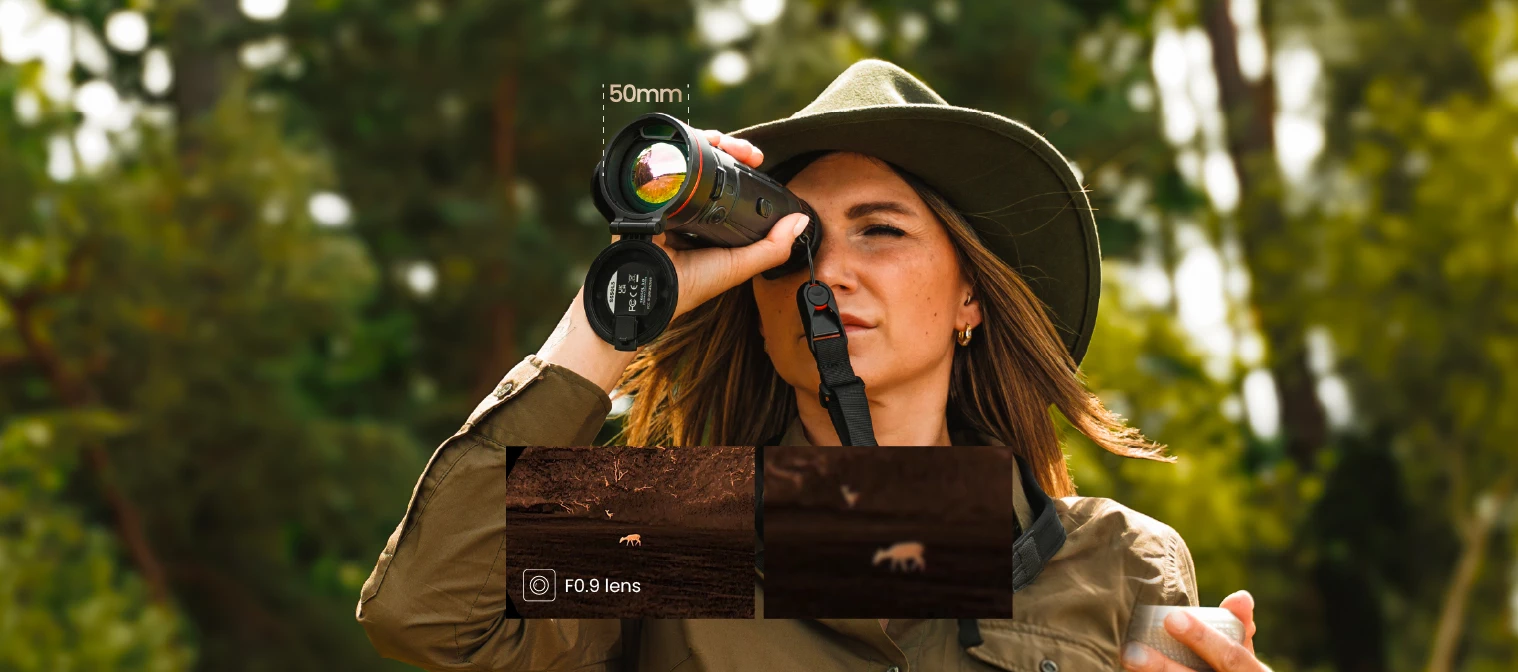
Using a handheld thermal imaging monocular, hunters can observe these areas without relying on flashlights, which often spook game.
Field edges are excellent vantage points, as they connect open terrain with cover. A thermal device helps monitor these transitions and determine if animals are moving through the area.
When selecting an observation location, hunters should also consider wind direction, terrain, access routes, and local hunting regulations. Equipment can help reveal activity, but understanding the landscape remains an important part of responsible hunting.
Observe Animal Movement and Group Behavior
Wild hogs may travel alone or in groups. Observing their movement patterns helps a hunter determine whether the animals are simply passing through the area, foraging for food, or moving toward cover.
Using a handheld thermal imaging monocular allows a hunter to scan the surroundings without needing to constantly shift a weapon-mounted optic. This can be useful when checking a wide area or observing movement before deciding where to look next.
Thermal imaging also helps in detecting other heat sources near the animals already spotted. However, each target still needs to be identified independently. A heat signature alone does not provide enough information to confirm an animal's species, size, or suitability for a particular hunting situation.
Taking the time to carefully observe the scene helps prevent mistakes. Before firing, a hunter must always positively identify the target and be certain of what lies beyond it.
Scan Large Areas More Efficiently
Wild hogs often cover large areas when searching for food or shelter. Relying solely on the naked eye to search such areas is extremely time-consuming, especially when visibility is poor and vegetation blocks the view.
l Systematic Scanning: Thermal imaging technology allows hunters to scan open terrain, field edges, and other key areas without depending on visible light. Instead of focusing on one small section at a time, hunters can observe different parts of the landscape and look for heat signatures that may indicate animal activity.
l Approaching a Field: Thermal imaging is particularly valuable when approaching a field or monitoring locations where wild boars have previously been sighted. Thermal imaging may also help hunters notice movement at the edge of their field of view, giving them a reason to examine that area more carefully.
However, scanning should be systematic rather than rushed. Hunters must remain attentive to the terrain, vegetation, and any potential obstacles. A clear observation plan helps reduce missed areas and makes it easier to assess the surroundings before deciding what to do next.
Adapt to Changing Hunting Environments
Hog hunting conditions can change throughout the night. Temperature differences between the ground, vegetation, and animals fluctuate constantly, while wind, moisture, and changing weather can affect visibility and animal activity.
Thermal imaging technology offers hunters an additional way to observe these dynamic changes. For example, after sunset, some areas may be difficult to see with ordinary optical equipment, but thermal imaging can still reveal clear thermal contrast. When moving between open farmland and wooded areas, hunters can use thermal observation to check suitable viewing areas and monitor animal movement.
The best approach depends on the location. In open terrain, observation distances can be greater; in forested areas, however, the field of view is often restricted by trees and dense vegetation. Hunters should remain flexible, adjusting their observation methods according to the terrain rather than expecting the same results in every environment.
Thermal imaging is most effective when combined with a solid understanding of local wildlife habits, careful observation, and cautious, safe practices. While it helps hunters gather information about their surroundings, it cannot replace the accurate identification of a target, nor can it substitute for responsible hunting decision-making.
Conclusion
Hunters use thermal imaging equipment for hog hunting because it helps them locate heat signatures in the dark, monitor field edges, and observe animal activity in conditions where visible-light equipment fails.
Furthermore, thermal imaging technology is highly valuable for scanning large areas and adapting observation methods to different environments. However, factors such as vegetation, weather, distance, and limitations in detail resolution can still affect its performance.
It is crucial to understand the hunting environment, carefully observe animals, positively identify targets, and comply with local hunting regulations. Used responsibly, thermal imaging can be a game-changer for hunters who need to work in low-light outdoor environments.