




Thermal Scope vs Thermal Monocular: Which One Should You Choose
When choosing a thermal imaging device, one of the first decisions is whether to buy a thermal scope or a thermal monocular. While both use thermal imaging technology to help users detect heat signatures in low-light conditions, they serve fundamentally different purposes in the hunting and outdoor sectors.
A thermal imaging scope is primarily designed for mounting onto a compatible firearm to assist with aiming for precision shooting. A thermal imaging monocular, on the other hand, is a handheld device used for mobile scanning, wildlife observation, and environmental assessment. Choosing the right type depends on what you want to do, not simply which device has more features.
What Is the Difference Between a Thermal Scope and a Thermal Monocular?
The primary difference lies in their operational application and legal status in many European hunting regions:
l Thermal Imaging Scope: Specifically built to withstand heavy caliber recoil, mounted on a firearm, and used as an aiming system. (Note: Depending on local state hunting laws in Germany, firearm-mounted thermal optics or clip-ons are subject to strict regional regulations regarding hunting use).
l Thermal Imaging Monocular: Designed exclusively for handheld observation. It is legally unrestricted, highly portable, and used for scanning fields, forest edges, and hillsides without carrying a firearm.
Although both types of products use thermal imaging sensors, they are not interchangeable. A handheld monocular is not a substitute for a firearm-mounted aiming optic, and a thermal scope may be less convenient for general observation.
When Should You Choose a Thermal Scope?
If your primary objective is hunting with a firearm or engaging in other lawful shooting activities, a thermal imaging scope is worth considering.
Firearm-Mounted Use
These scopes can be mounted onto compatible firearms, providing a thermal image through the sighting optic. This setup is intended for users who need thermal viewing as part of their aiming system.
Before making a purchase, be sure to verify mounting compatibility, the specific firearm platforms supported, the control interface, and all relevant local laws and regulations.
Aiming Is Your Main Priority
The core design purpose of a thermal imaging scope is aiming, rather than general scanning. Its configuration is tailored to support workflows centered on shooting; therefore, if you specifically need a thermal imaging device for the purpose of aiming, this may be the most suitable choice.
However, the best scope still depends on factors such as image quality, field of view, magnification, operating conditions, and compatibility with your equipment.
When Should You Choose a Thermal Imaging Monocular?
When your primary objective is observation rather than aiming, a thermal imaging monocular is generally the more flexible choice.
l Legal and Unrestricted Scanning: In Germany and many other regions, handheld thermal imaging monoculars are universally permitted for general observation, making them an essential tool for scouting game without regulatory hurdles.
l Wildlife Observation & Scouting: Ideal for scanning dark woodlines, crop fields, and meadows for heat signatures (such as wild boars or deer) without disturbing them.
l Outdoor Exploration & Safety: Perfect for navigating unfamiliar terrain at night, checking surroundings, and assessing distances before making a stalk. For users requiring precise distance data, models featuring a built-in laser rangefinder (LRF) provide immediate target metrics.
Thermal Scope vs Thermal Monocular: Key Factors to Compare
Factor | Thermal Scope | Thermal Monocular |
Main purpose | Aiming and shooting | Observation and scanning |
Typical setup | Mounted on a compatible firearm | Handheld |
General wildlife watching | Usually less convenient | Well suited |
Outdoor area scanning | Limited by aiming setup | Flexible handheld viewing |
Firearm compatibility | Essential | Not required |
Built-in laser rangefinder | Depends on model | Available on selected models |
Best for | Users who need a thermal aiming optic | Users who need a portable observation device |
Neither category is automatically better in every situation. The right choice depends on whether you need an aiming system or a separate tool for observing your surroundings.
Why choose the Guide Kodiak 3.0?
For users who need a handheld thermal imaging device (rather than a scope mounted on a firearm), the Guide Kodiak 3.0 thermal imaging monocular is a practical choice for hunting observation, wildlife observation, and outdoor exploration.
This series consists of two models, each featuring a different lens configuration:
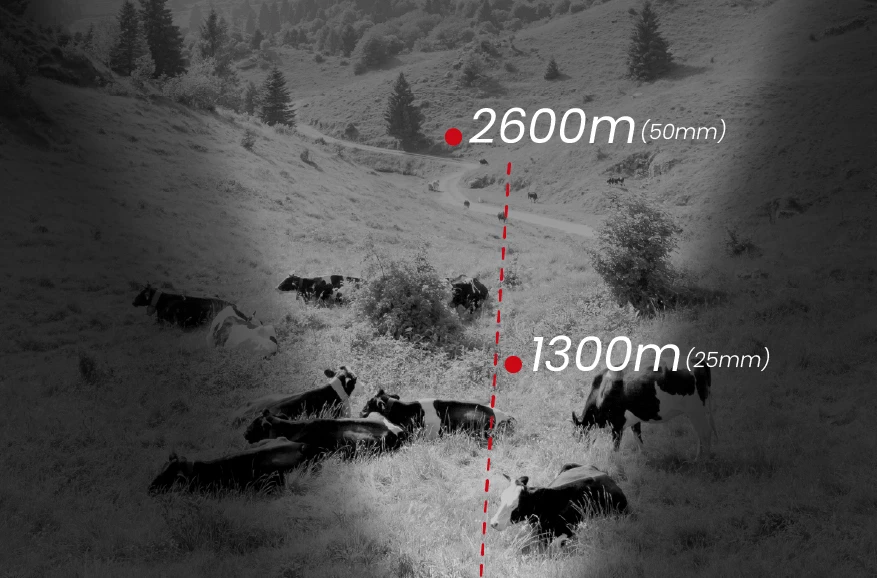
TK635L 3.0: Equipped with a 35mm F0.9 lens, it offers a field of view of 12.5° × 10.0°. Its wider field of view is ideal for scanning large areas.
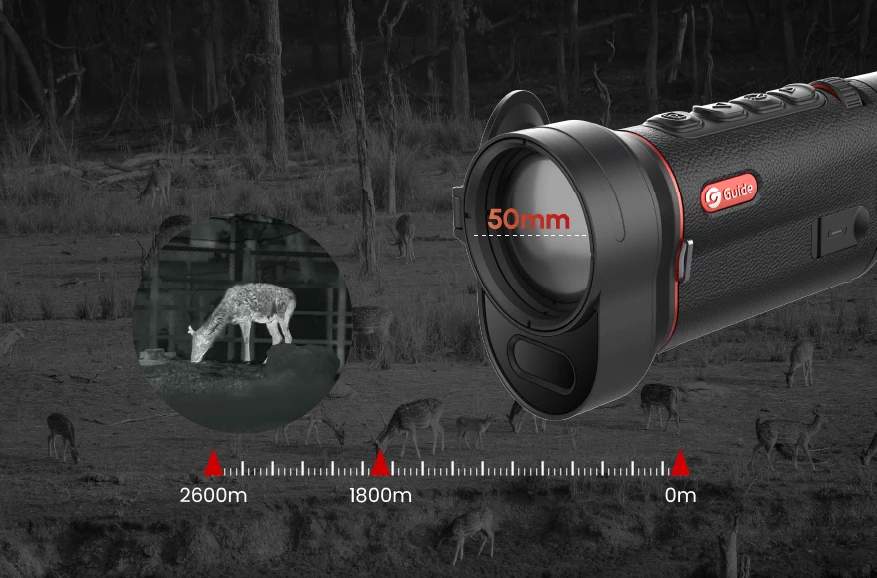
TK650L 3.0: Equipped with a 50mm F0.9 lens, it offers a field of view of 8.8° × 7.0°. Its narrower field of view is better suited for observing targets at greater distances.
Both models are equipped with a thermal imaging sensor featuring a 640×512 resolution and a 12μm pixel pitch. They offer an NETD of 15mK, a 50Hz frame rate, and an AMOLED display with a resolution of 2560×2560. These specifications support thermal observation, while the two lens options let users choose according to their preferred viewing distance and field of view.
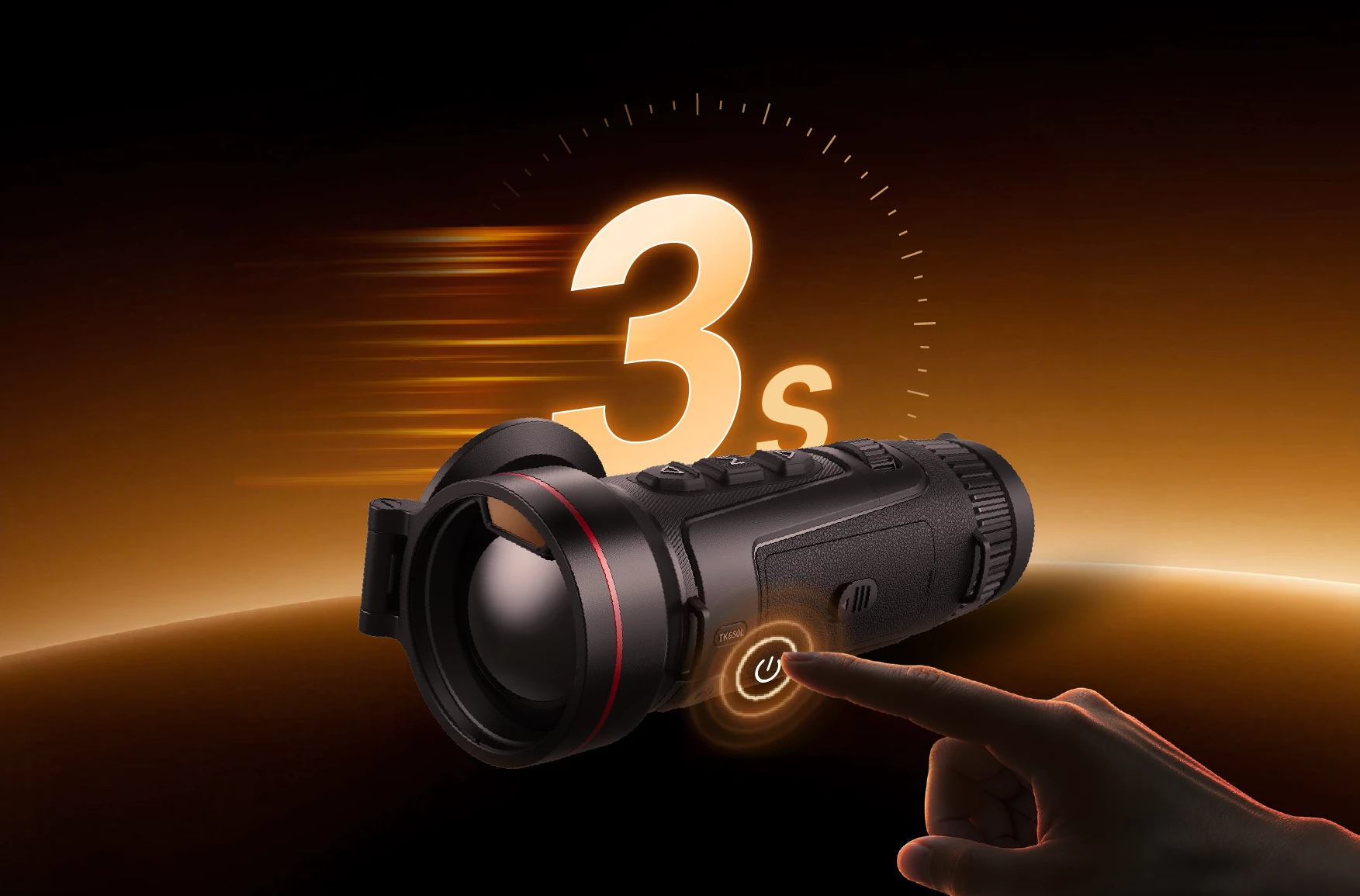
The Kodiak 3.0 also integrates a laser rangefinder, capable of measuring distances up to 1,200 meters under ideal conditions. The device utilizes shutterless technology, supports a 3-second rapid startup, and features an IP67 ingress protection rating, making it highly suitable for outdoor use.
As a handheld observation device, the Kodiak 3.0 is designed for users who need to perform environmental scanning, wildlife observation, and target distance measurement without using a firearm-mounted thermal optic.
How to Choose the Right Device for Your Needs
Before buying, start with your main activity rather than comparing specifications alone.
If you need to equip a firearm with thermal imaging optics for lawful shooting activities, choose a thermal scope.
If your mainly use involves searching outdoor areas, observing wildlife, or detecting heat sources while on the move, opt for a thermal monocular.
If you frequently need to determine distances while observing, consider a monocular equipped with a built-in laser rangefinder.
If you need to scan large areas or focus on distant subjects, compare the lens specifications and field of view across different models.
Evaluate the device’s overall performance, including resolution, sensitivity, frame rate, battery life, display, and operating controls.
If you engage in both hunting and wildlife observation, these two types of devices serve distinct purposes: a monocular is designed for independent observation, while a thermal scope is specifically engineered for mounting onto a firearm. You may not need both if your activities are focused on only one of these purposes.
Conclusion
When choosing between a thermal imaging scope and a thermal imaging monocular, the core question is: do you need to aim with a firearm, or do you need to observe your surroundings?
Thermal imaging scopes are specifically designed to be mounted on firearms for aiming, while thermal imaging monoculars offer greater versatility - making them ideal for wildlife observation, outdoor exploration, and scanning the environment. If your primary need is observation, the Guide Kodiak 3.0 is worth considering; it is available with a choice of two lens specifications, features a 640×512 thermal sensor, supports a 50Hz frame rate, and includes a built-in laser rangefinder.
Choosing the right product category first will make it easier to compare specifications and find a device that matches your actual needs.