
.png)
.png)
.png)






Thermal Monoculars for Security and Search & Rescue
Security and rescue teams often work in darkness, difficult terrain, or areas with limited visibility. In these conditions, choosing the right observation technology can directly affect how quickly a team understands what is happening.
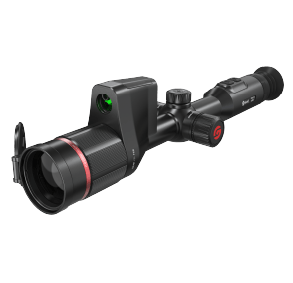
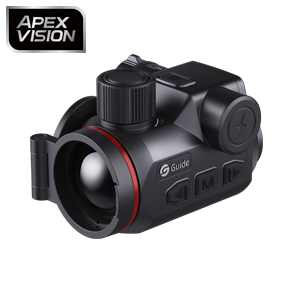
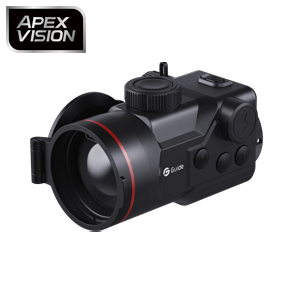
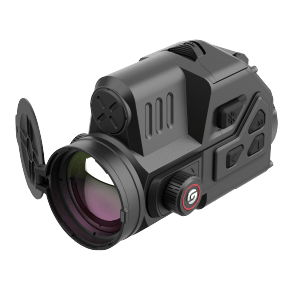
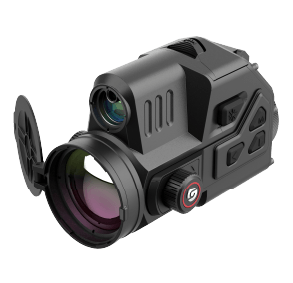
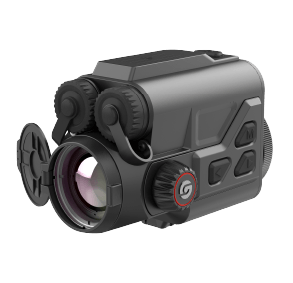
Thermal monoculars represent one such option. Unlike night-vision devices that rely on ambient light, thermal imaging technology generates images by detecting heat differences. Compared with fixed visible-light network cameras, a thermal monocular also provides something cameras cannot: portable, on-the-ground observation.
Thermal Monocular vs. Night Vision vs. Network Cameras
Each technology has a different role:
Feature | Thermal Monocular | Night Vision | Visible-Light Network Camera |
Imaging Method | Detects heat | Uses available light | Captures visible light |
Complete Darkness | Yes | Limited without assistance | Requires lighting |
Environmental Detail | Moderate | Good | Excellent in suitable light |
Mobility | High | High | Usually fixed |
Continuous Monitoring | Limited | Limited | Excellent |
Best Use | Mobile detection and assessment | Detailed night viewing | 24/7 area monitoring |
This means these technologies are not necessarily competitors. They can work together as different layers of an observation system.
Security Forces: From Fixed Monitoring to Field Assessment
Security personnel typically use cameras to monitor gates, roadways, buildings, or surrounding areas. However, the coverage of fixed cameras is limited to their installation locations.
A thermal monocular gives personnel a mobile option.
For example, when a network camera detects unusual activity, an operator can move to a different location and use a thermal monocular to inspect areas outside the camera's field of view.
The workflow is as follows:
Camera monitoring → Alert → Mobile thermal assessment
This can be useful around large properties, remote facilities, border areas, and other locations where personnel cannot rely only on fixed surveillance.
Thermal Imaging vs. Night Vision: Different Advantages
Night vision and thermal imaging are often viewed as similar technologies, but they provide different information.
Night vision technology renders images that make it easier to discern environmental details. This technology is particularly useful when there is a need to identify roads, buildings, vegetation, and other physical details.
Thermal imaging focuses on temperature differences. It can therefore be useful when the main question is whether there is thermal activity in a dark area.
For security teams, adopting one technology does not render the other redundant; night vision aids in interpreting the environment, while thermal imaging helps identify areas requiring special attention.
Search & Rescue: Helping Teams Decide Where to Search First
For search and rescue teams, the challenge is often not simply seeing a missing person. It is covering a large area within limited time.
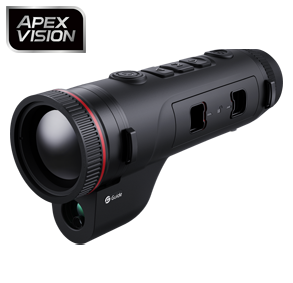
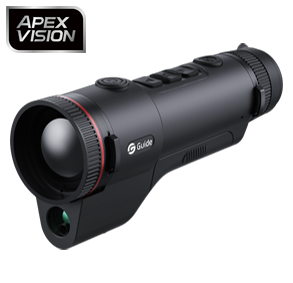
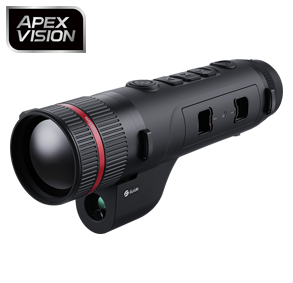
Handheld thermal imaging monoculars enable teams to scan fields, forest edges, slopes, and open ground from different positions.
Once a potential heat signature is detected, search and rescue personnel can pinpoint the exact location using tools such as GPS, maps, radios, drones, night vision, or direct search methods.
The important benefit is therefore search prioritization. Thermal imaging can help teams decide which areas deserve closer attention instead of treating every part of a large search zone equally.
Why Mobility Matters in Rescue Operations
While fixed cameras offer continuous monitoring, rescue teams cannot remain stationed at a single location.
In contrast, handheld thermal imaging monoculars can move with the team and provide observation from changing positions.
Consequently, factors such as equipment weight, battery life, startup speed, and durability are just as important as image quality. Equipment used in mountains, forests, or remote areas needs to remain practical during long operations.
Personal Security as a Supporting Application
Thermal monoculars can also support personal security around homes, remote properties, campsites, and other outdoor locations.
A fixed camera may provide continuous monitoring, while a handheld thermal device can be carried to areas that are outside the camera's coverage.
For personal use, thermal imaging technology is best suited as a supplementary tool rather than a replacement for alarms, lighting, or professional surveillance systems.
What Should Professional Users Look For?
When selecting equipment for security and rescue applications, users should consider the system as a whole rather than focusing only on individual specifications.
Key factors to consider include:
l Thermal imaging resolution
l Lens and field of view
l Detection performance
l Battery life
l Weight
l Durability
l Ease of operation
Rescue teams may prioritize portability and battery life, while security personnel might place greater emphasis on durability and reliable performance in complex operational environments.
Guide is dedicated to providing thermal imaging products for outdoor and professional use, offering portable solutions for security support, search and rescue operations, and other demanding environments.
Conclusion
Thermal monoculars are most valuable when they complement other observation technologies.
Visible light network cameras excel at continuous remote monitoring; in well-lit conditions, night vision technology can reveal environmental details that are more in line with visual habits; while thermal imaging monoculars provide mobile observation capabilities based on thermal signals, covering areas that fixed monitoring systems cannot fully reach.
For security forces, this can connect fixed surveillance with field assessment. For search and rescue teams, thermal imaging can help prioritize large search areas and guide further investigation.
For personal security, it provides an additional portable observation option.
The strongest solution is not choosing one technology for every task, but combining the right tool with the right operational need.












.png)

.png)
