
.png)
.png)
.png)





What Determines Thermal Imaging Quality? The Complete Guide for Hunters
The quality of a thermal image is not determined by one specification. When choosing thermal monoculars, scopes, or binoculars, many hunters tend to focus only on sensor resolution. While resolution is certainly important, it is merely one part of the complete imaging system.
A clear thermal image depends on a variety of factors, including the sensor, lens, thermal sensitivity, image processing, refresh rate, display, and even weather conditions. Understanding these factors helps hunters and outdoor enthusiasts select thermal imaging equipment that performs well in real situations.
Thermal Sensor Resolution
Sensor resolution is one of the primary technical specifications of interest.
Common thermal resolutions include 256×192, 384×288, 400×300, and 640×512. Sensors with higher resolutions contain more pixels and can provide more image detail, making it easier to distinguish small targets.
For example, when observing the same scene, a thermal sensor with 640×512 resolution generally provides more detail than a 256×192 sensor.
However, high resolution does not necessarily guarantee superior image quality; the lens, image processing technology, and the quality of the sensor itself must all work in concert to produce an excellent image.
Thermal Sensitivity and NETD
Thermal sensitivity determines a sensor's ability to detect small temperature differences.
NETD is a common technical specification. A lower NETD value generally indicates higher sensitivity to small temperature differences.
This is particularly important when the target and background temperatures are similar.
For hunters, good thermal sensitivity helps maintain image detail when observing animals against backgrounds with low thermal contrast, such as grass, soil, or rocks.
Lens Quality and Focal Length
The lens is another major part of thermal image quality.
A high-quality thermal imaging lens enables the sensor to capture infrared energy more effectively, resulting in clearer images. Factors such as lens material, optical design, and focal length all affect the final result.
Lenses with shorter focal lengths typically provide a wider field of view, while lenses with longer focal lengths offer more magnification, making them better suited for observing distant targets.
The best choice depends on the specific application of the thermal imaging device. For instance, a hunter searching for targets in a nearby wooded area might prefer a wide field of view, while a user observing distant targets in open terrain may need more optical reach.
Image Processing Technology
Raw thermal sensor data is not the final image that appears on the screen.
Before the image is displayed, the device's image processing system optimizes contrast, sharpness, noise control, and other visual details.
Advanced image processing technology makes thermal images easier to read without simply increasing brightness.
This is one of the reasons why two devices with comparable sensor resolutions can produce significantly different image quality.
Refresh Rate
The refresh rate determines the smoothness of the thermal image as the device or the target moves.
A higher refresh rate provides a smoother image, which is particularly useful when tracking moving animals or scanning an area while walking.
If the refresh rate is too low, moving targets may appear less smooth, making them harder to follow.
In hunting scenario, the refresh rate is especially important when observing fast-moving animals.
Display Quality
The display is the final stage between the thermal data and the user's eyes.
If display quality is poor, even a high-performance sensor cannot provide a good user experience.
Resolution, brightness, contrast, color reproduction, and screen size all affect how easily a user can understand the thermal image.
A clear display enables hunters to more easily recognize small differences, particularly during long periods of observation.
Environmental Conditions
Even a high-quality thermal imaging device can be affected by outdoor conditions.
Factors such as fog, heavy rain, humidity, wind, and changing temperatures can all influence thermal contrast and effective viewing distance.
For example, an animal is more easily detected when there is a significant difference between its body temperature and the background temperature; conversely, when the temperatures are similar, image contrast may be reduced.
This means thermal image quality should always be judged together with the environment where the device will be used.
Calibration and Image Consistency
Thermal imaging systems require calibration to maintain a stable image.
Good calibration helps reduce unwanted noise and ensures image consistency when sensor temperatures or environmental conditions change.
Automatic calibration is highly practical, as it allows the device to correct image changes automatically without requiring constant manual adjustment.
For hunters, consistent image quality is important because it makes it easier to compare targets and backgrounds during a long session.
What Matters Most for Hunters?
For hunting, there is no single specification that determines the best thermal image.
A well-balanced thermal imaging device should feature:
l Excellent sensor resolution
l Low NETD
l A suitable lens
l Reliable image processing
l A practical refresh rate
l A clear display
l Stable performance in outdoor environments
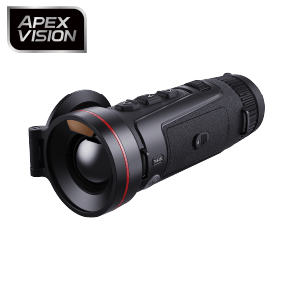
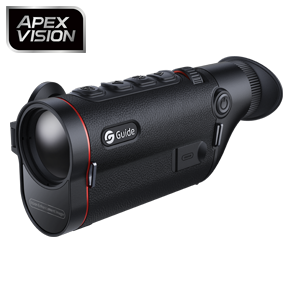
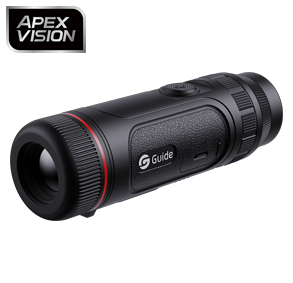
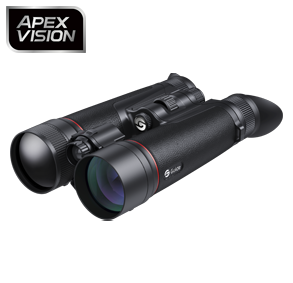
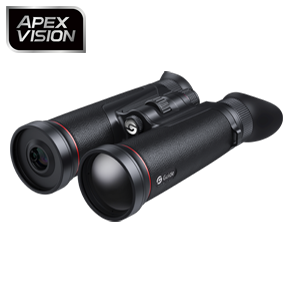
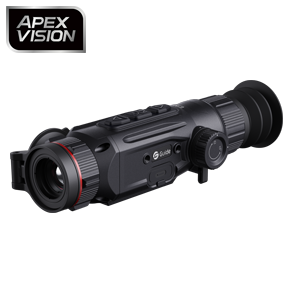
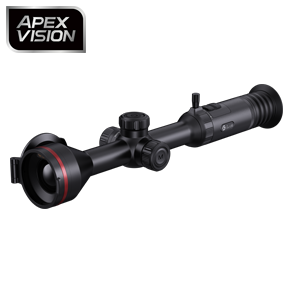
Guide provides thermal imaging solutions for hunters and outdoor enthusiasts, combining advanced sensors with practical optical and image processing technology.
Conclusion
So, what determines thermal imaging quality?
The answer lies in the entire imaging system, not just the sensor resolution. Resolution affects detail; NETD affects thermal sensitivity; the lens affects optical performance; image processing technology enhances clarity; and refresh rate affects moving targets.
Additionally, environmental conditions and display quality directly impact the image the user finally sees.
For hunters, the best thermal imaging device is not simply the one with the highest number on the specification sheet. It is the one that combines these technologies effectively and provides a clear, stable image in the conditions where it will actually be used.












.png)

.png)
