




Thermal With LRF VS Non-LRF: Do You Need Laser Rangefinder?
When choosing a thermal imaging monocular for hunting, a key consideration is whether to choose a model equipped with a built-in laser rangefinder. Both LRF and non-LRF thermal devices help users detect animals in low-light conditions, but they differ in how they provide distance information.
Although a thermal image reveals an animal's location, it does not automatically indicate the exact distance. This difference is crucial when you need to assess terrain, plan your approach, or make decisions based on range. Understanding the advantages and limitations of each option can help you choose the right thermal monocular for your hunting needs.
What Is LRF in a Thermal Monocular and How Does It Measure Distance?
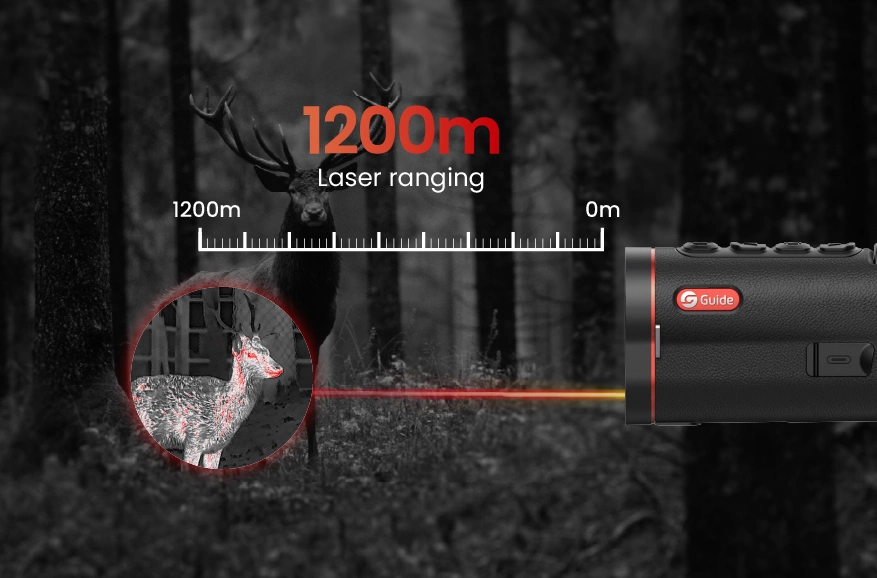
LRF stands for Laser Rangefinder. It uses a laser beam to measure the distance between the device and a target. The rangefinder sends out a laser pulse and measures how long it takes for the reflected signal to return. The device then calculates the distance based on the signal's travel time.
When a rangefinder is integrated into a thermal monocular, users can both view thermal image and obtain distance information using a single device. This avoids the need to carry a separate handheld rangefinder, which can make outdoor observation more convenient.
A built-in LRF is particularly useful when the target is visible in the thermal image but its distance is difficult to judge by eye. It can provide a numerical reading to support better decisions in the field.
However, an LRF does not improve the thermal sensor's ability to detect an animal. Its main function is to add distance measurement to thermal observation. The thermal imaging system and the rangefinder perform different tasks, but they complement each other.
Why Is Distance Estimation So Difficult with a Non-LRF Thermal Optic?
While non-LRF thermal monoculars are effective at detecting warm targets and their movements, it is difficult to accurately gauge the distance to a target based only on the thermal image.
Thermal image does not always provide the same depth cues that the human eye perceives when observing a natural environment. The size of an animal on the display changes with distance, but the user may not know the animal's actual size. A large animal far away can appear similar in size to a smaller animal nearby.
The surrounding terrain can also be misleading. In open areas, while animals may be easier to spot, the lack of reference points makes distance estimation extremely difficult. Trees, slopes, and other objects can provide some context, yet they do not guarantee an accurate estimate.
Digital zoom does not solve this problem either. Zooming in on a thermal image simply makes the target appear larger on the display; it does not provide a reliable measurement of the distance between the user and the target.
A non-LRF model may still be suitable for users who mainly scan nearby areas, observe wildlife, or use familiar terrain to estimate distance. It is important to keep in mind, however, that such visual estimates are merely approximations and should not be considered precise measurements.
How Accurate Is an Integrated Laser Rangefinder on a Thermal Monocular?
Compared to visual estimation, a built-in laser rangefinder provides more objective distance readings; however, its performance can vary depending on the specific device and the operating environment.
The target's surface, size, angle, and distance can affect the returned laser signal. Weather conditions can also affect ranging performance. A small target or one partially hidden by vegetation can be harder to measure than a large, unobstructed target.
Users should also distinguish between the maximum ranging range claimed by the manufacturer and the actual distance at which reliable, consistent readings can be obtained. A device may be capable of ranging to a specified distance under suitable conditions, but that does not mean every target can be measured at that distance.
For the best results, ensure the rangefinder is consistently aimed at the target, follow the device's operating instructions, and verify readings before relying on them. If a reading appears unusual, it is advisable to take another measurement, provided conditions allow.
An LRF provides useful information, but it should be treated as a measurement aid rather than a guarantee of perfect accuracy in every situation.
Is a Non-LRF Thermal Monocular Enough, or Do You Need Instant LRF Telemetry?
The right choice depends on how you intend to use the device.
If your primary purpose is to patrol the site, observe wildlife, or search for animals, and you don't need precise distance data, then a thermal imaging monocular without rangefinding capabilities might suffice. These models can also appeal to buyers who want a simpler device or prefer to keep the purchase cost lower.
An LRF-equipped model is more useful when distance information frequently affects your decisions. For example, a hunter operating in unfamiliar terrain may need to distinguish between targets at varying distances. Furthermore, accurate range data helps in understanding the layout of the landscape or gauging the spacing between observed objects.
Convenience is another factor. With an integrated LRF, there is no need to switch back and forth between your thermal monocular and a separate rangefinder. This reduces the amount of gear you need to manage and makes it easier to obtain range readings, even when your hands are otherwise occupied.
Before making a purchase, consider the following: How often do you need to know the distance to a target? How familiar are you with the areas where you typically hunt? Would carrying an additional piece of rangefinding equipment be an inconvenience? If distance information is not important to you, then a device without a distance measurement function may be sufficient; however, if distance information frequently influences your decisions, then choosing a device with a built-in distance measurement function, even if it costs more, is worthwhile.
Feature | Thermal Monocular with LRF | Thermal Monocular without LRF |
Distance Measurement | Measures the distance to a suitable target directly | Requires visual estimation or a separate rangefinder |
Ease of Use | Combines thermal observation and distance measurement in one device | Offers straightforward thermal observation without an integrated ranging function |
Field Convenience | Reduces the need to carry and switch between separate devices | May require additional equipment when accurate distance measurements are needed |
Best Suited For | Hunters and outdoor observers who regularly need distance information | Users who mainly scan familiar areas or rarely need to measure distances |
Key Buying Consideration | Check the ranging distance, measurement accuracy and operating conditions | Focus on thermal imaging performance, field of view, weight and battery life |
How Does Kodiak's Built-In LRF Deliver Single-Handed Precision in the Field?
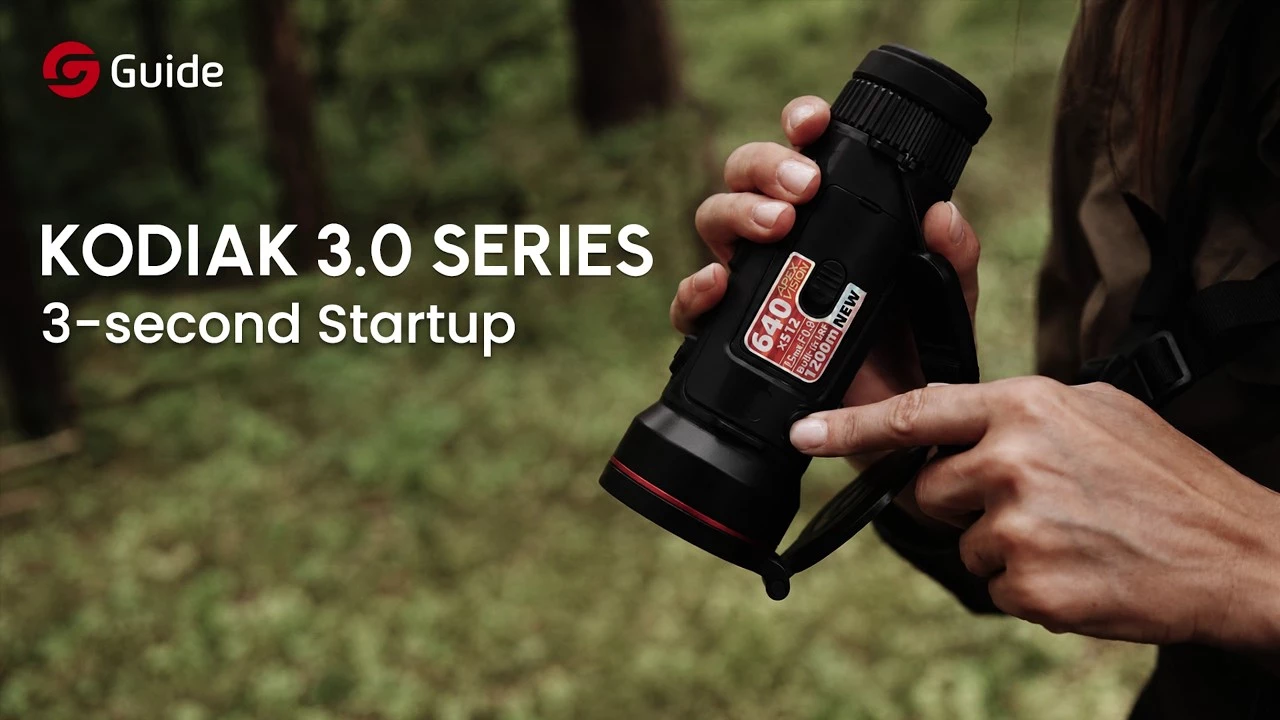
For hunters who require both thermal imaging observation capabilities and rangefinding functionality, the GUIDE KODIAK 3.0 series of thermal monoculars offers an integrated solution. The TK635L 3.0 and TK650L 3.0 models in this series feature built-in laser rangefinders, capable of measuring distances of up to 1,200 meters under ideal conditions.
By combining these functions into a single handheld device, users can obtain distance information while observing a target, eliminating the need to carry a separate rangefinder. This can make field operation more convenient, particularly when users need to manage other equipment or move through changing terrain.
These two models are equipped with different lenses to accommodate diverse observation needs: the TK635L 3.0 features a 35mm F0.9 lens, while the TK650L 3.0 comes with a 50mm F0.9 lens. The 35mm configuration offers a wider field of view, making it well-suited for broad-area scanning, while the 50mm configuration provides a narrower field of view, better suited for long-range observation.
Furthermore, both models are equipped with a 640×512 resolution thermal sensor, support a 50Hz frame rate, and feature a high-resolution AMOLED display. These features support thermal observation, while the integrated LRF adds a separate source of distance information.
For those in the market for a thermal monocular, the primary benefit of this series is the seamless integration of observation and rangefinding. Actual ranging results will still depend on target characteristics and environmental conditions, so users should follow the product instructions and verify readings when necessary.
Conclusion
Choosing between a thermal monocular with LRF and one without LRF comes down to whether you need reliable distance measurements as part of your regular outdoor activities. A non-LRF model can work well for general observation and wildlife detection, while an integrated LRF provides a more direct way to measure target distance.
Before making your decision, take into account factors such as your typical hunting environment, the distances at which you usually observe, your budget, and your preference for ease of use. If distance frequently affects your decisions, a thermal monocular with a built-in laser rangefinder may be the more practical choice.