




12μm vs 17μm Sensor: Does Pixel Pitch Matter
When choosing thermal imaging equipment, buyers typically compare specifications such as sensor resolution, lens size, detection range, and image quality. Pixel pitch is also a parameter worth understanding, especially when comparing 12μm and 17μm thermal sensors. Although the numerical difference may appear minor, it actually influences the design of a thermal imaging system and determines the level of detail that can be captured under various observational conditions.
Does a smaller pixel pitch necessarily mean better performance? Not necessarily. To make the right choice, you need to understand how pixel pitch works and how it interacts with other thermal imaging specifications.
What Is Pixel Pitch in a Thermal Imaging Sensor, and Why Does It Matter?
Pixel pitch refers to the distance between the centers of two neighboring pixels on a thermal sensor, typically measured in micrometers. A 12μm sensor has a smaller distance between pixels than a 17μm sensor.
This metric is significant because it influences how manufacturers balance resolution, sensor size, and optical design. For example, a sensor with smaller pixels can fit more pixels into a given physical area. This allows manufacturers to develop compact sensors with relatively high resolutions.
However, pixel pitch is not the same as resolution. A 12μm sensor does not automatically produce sharper images than a 17μm sensor; the final image quality depends on a variety of factors, including the total pixel count, lens quality, thermal sensitivity, image processing, and display performance.
For buyers comparing thermal monoculars, pixel pitch is best treated as one part of the specification sheet rather than a standalone measure of quality.
12μm vs 17μm Pixel Pitch: Which Thermal Sensor Delivers Better Image Detail?
When manufacturers aim to achieve a high pixel count within a compact sensor, 12μm thermal imaging sensors offer a distinct advantage. More pixels can be placed within a given sensor area, potentially supporting detailed images without requiring a physically larger detector.
17μm sensors use larger pixels. Depending on the sensor design, these larger pixels may be capable of collecting more infrared energy individually. However, this does not automatically mean that the complete system will deliver better image detail. The sensor's resolution and the optical system must also be considered.
For example, when comparing two thermal devices, one with a 12μm, 640×512 sensor and another with a 17μm sensor at a lower resolution, the 12μm device may show finer image detail if the lenses and image processing are suitable. Conversely, if the resolution, lens configuration, or image processing systems differ between two devices, one cannot determine which is superior based only on the pixel pitch.
Hunters should consider the details they need to see. Simply detecting a warm-blooded animal against a cold background is a very different task from discerning its outline, body posture, or movements amidst vegetation. A higher-resolution sensor may help reveal more visual information, but the actual result depends on the entire imaging system.
Does Smaller Pixel Pitch Mean Better Thermal Sensitivity and Longer Detection Range?
A smaller pixel pitch does not automatically equate to higher thermal sensitivity or a longer detection range. These are separate performance factors.
Thermal sensitivity is typically measured by NETD, which reflects a thermal imaging sensor's ability to distinguish between minute temperature differences. Under specific testing conditions, a lower NETD value generally indicates better thermal sensitivity. It is impossible to determine a device's NETD level based only on its pixel pitch.
Detection range is influenced by a variety of factors, including the lens, sensor resolution, target size, atmospheric conditions, and the contrast between the target and its surroundings. A larger lens may collect more infrared radiation and help a system detect distant targets, while sensor resolution affects how many pixels cover the target.
Therefore, when making a purchase, buyers should conduct a comprehensive comparison of all technical specifications rather than simply assuming that a 12μm sensor will always outperform a 17μm sensor.
When evaluating a thermal imaging monocular, one should consider a combination of factors: sensor resolution, NETD, lens focal length, lens aperture, field of view, and the manufacturer’s stated detection range. Consider these details together to understand what the device can realistically deliver.
How Do 12μm and 17μm Thermal Sensors Perform in Real-World Hunting Conditions?
In hunting environments, the best sensor depends on where and how you plan to use the device.
When searching in open terrain, hunters often need to cover large areas and locate targets at varying distances. In this situation, the combination of field of view, lens specifications, sensor resolution, and image clarity may matter more than pixel pitch alone.
In forested areas, vegetation may partially block an animal, creating a visually complex background. A thermal imaging device must provide effective contrast and sufficient detail to help the user identify what is shown on the display. Neither a 12μm nor a 17μm sensor guarantees good identification in every condition.
At shorter distances, a wider field of view is helpful for scanning an area and tracking the movement of targets; at longer ranges, an appropriate lens and sufficiently high sensor resolution become increasingly critical. Atmospheric conditions, humidity, rain, and temperature differences can also affect the image.
Before making a purchase, consider the terrain where you typically hunt, your preferred observation distances, and your requirements for portability. Compare real-world image samples when possible, rather than relying on pixel pitch as the only deciding factor.
Why Choose a High-Spec 12μm Thermal Monocular? Meet the GUIDE KODIAK 3.0
For users seeking a compact thermal imaging monocular that delivers detailed imaging capabilities, devices equipped with a 12μm pixel-pitch sensor are an excellent starting point. However, a truly outstanding device relies on the seamless synergy between its sensor, lens, display, and image processing system.
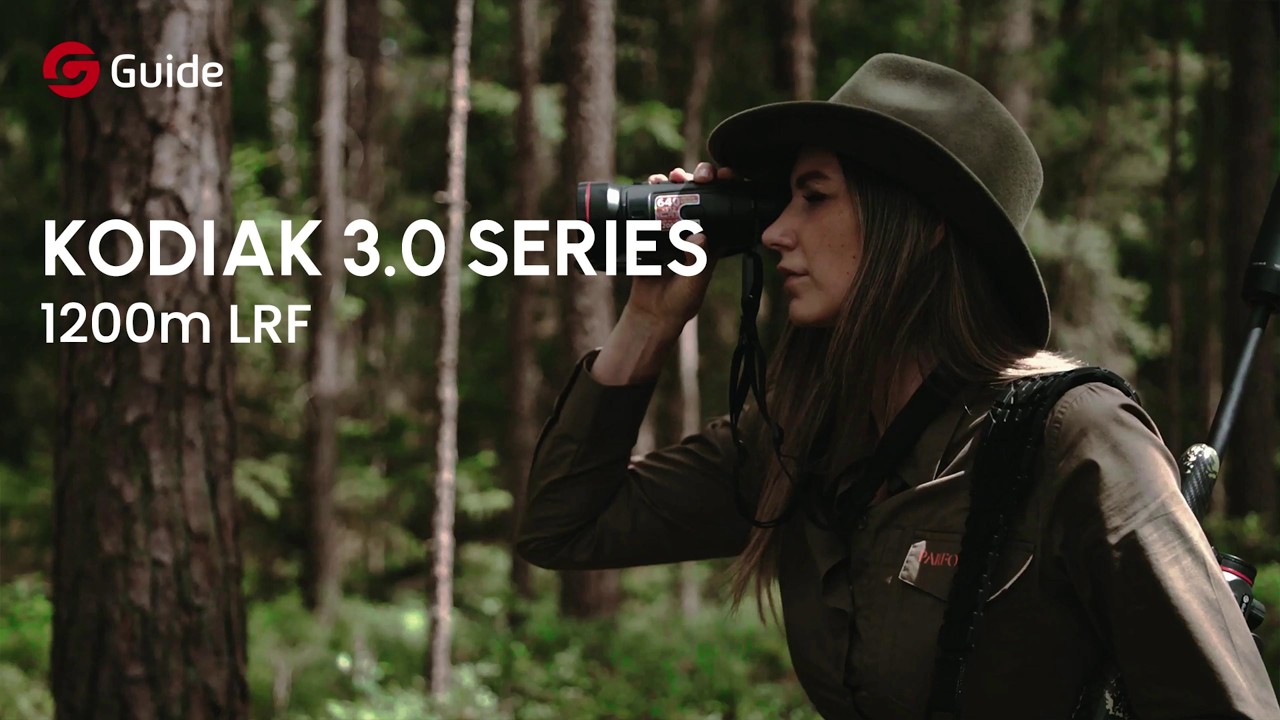
The GUIDE KODIAK 3.0 series of thermal imaging monoculars features a 640×512 resolution sensor with a 12μm pixel pitch and a 50Hz frame rate. These specifications ensure that, during outdoor use, the device provides both intricate thermal detail and fluid, smooth motion. The series also features a high-resolution AMOLED display, helping users view the thermal image clearly.
The series offers two lens configurations: the TK635L 3.0, which uses a 35mm F0.9 lens, and the TK650L 3.0, which features a 50mm F0.9 lens. The 35mm version provides a wider field of view, making it well-suited for broad-area searches, while the 50mm version offers a narrower field of view, which is better for observing distant targets.
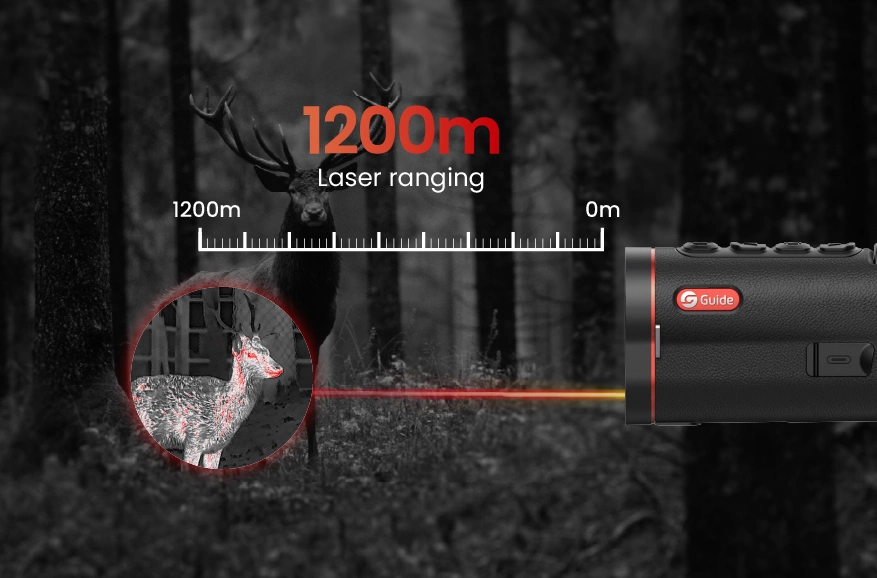
Both models include a built-in laser rangefinder, capable of measuring distances up to 1,200 meters under suitable conditions. Actual ranging and detection performance can vary with the target, environment, and operating conditions.
When comparing the KODIAK 3.0 with other thermal monoculars, users should look beyond the single 12μm specification. A product’s overall performance is determined by the combination of its sensor resolution, lens configuration, field of view, display quality, and user experience. Choosing the right combination is more important than selecting a device based on one specification alone.
Conclusion
The difference between 12μm and 17μm thermal sensors matters, but pixel pitch does not tell the whole story. A smaller pixel pitch allows manufacturers to create more compact sensors with higher resolution; however, the final image detail, thermal sensitivity, and detection range are determined by the interplay of various technical specifications.
For hunters, the most suitable device should be chosen based on the specific operating environment, observation distances, and individual requirements. Compare pixel pitch alongside sensor resolution, NETD, lens specifications, field of view, and real-world image performance. This approach will help you choose a thermal monocular based on practical performance rather than a single number on the specification sheet.